Agreement
The offer, payment terms, refund policy, client responsibilities, clickwrap acceptance, signature, and enrollment date.
Evidence and defense
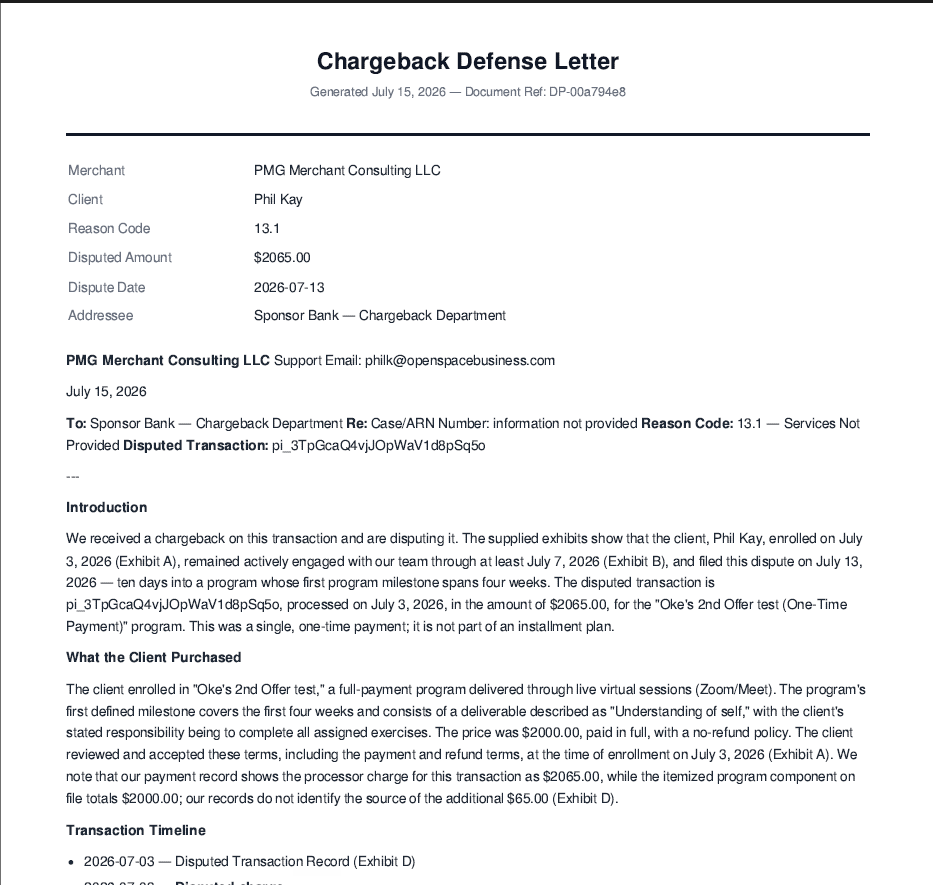
ScaleSafe starts with the disputed transaction, finds the program it belongs to, and organizes the records that help explain the purchase, delivery, and client relationship.
The real question
A client may have bought more than one program. ScaleSafe keeps each program's terms, payments, messages, and delivery records together, then uses the disputed payment to build the response around the matching enrollment.
What ScaleSafe collects
A strong record can show authorization, delivery, participation, communication, and how the merchant responded when the client needed help.
The offer, payment terms, refund policy, client responsibilities, clickwrap acceptance, signature, and enrollment date.
The disputed charge, payment plan, processor reference, prior payments, refunds, cancellations, and account changes.
Messages, pulse responses, support history, milestone sign-off, appointments, attendance, access, and fulfillment activity.
A simple example
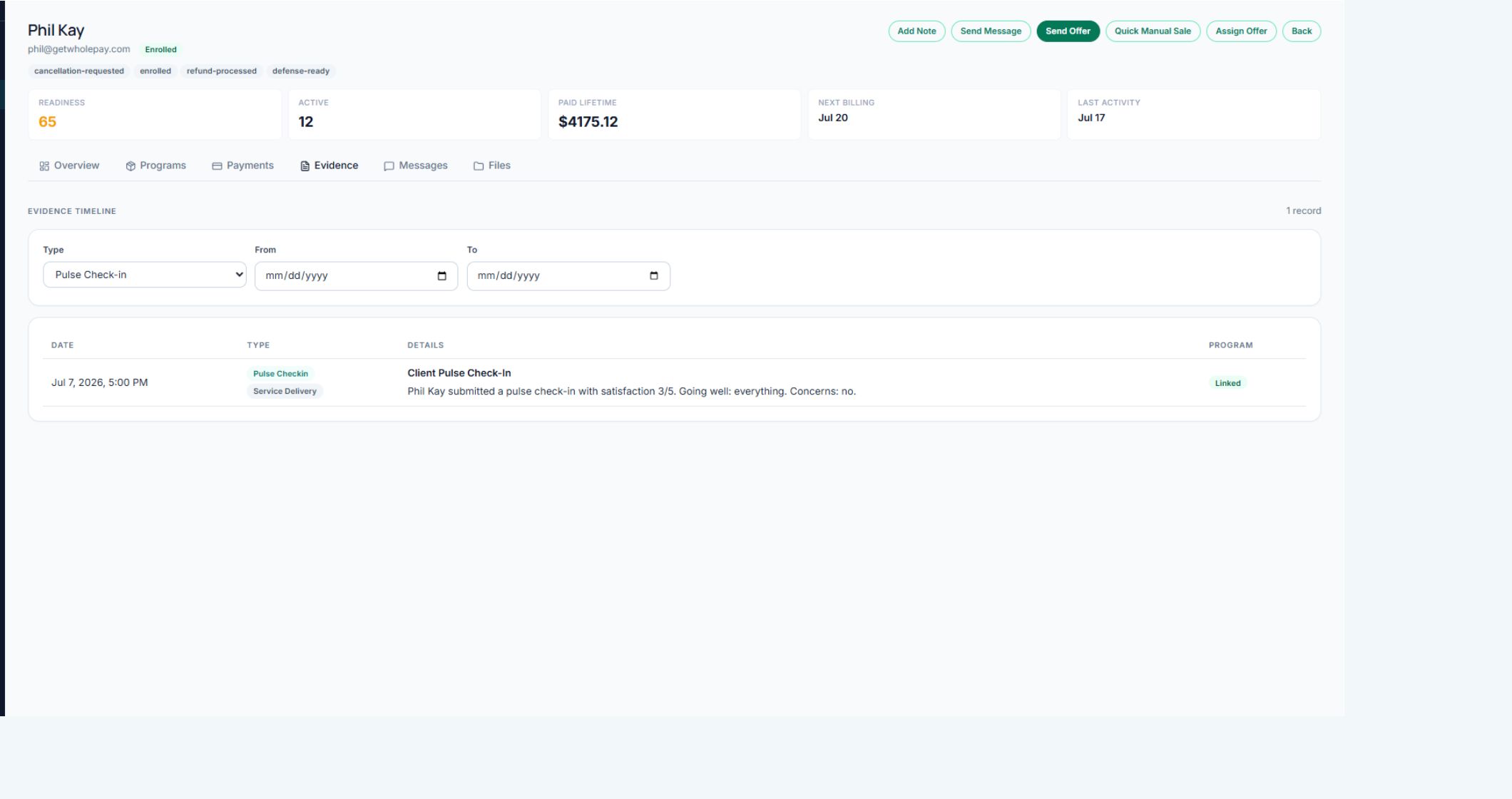
ScaleSafe can place the signed enrollment, the disputed payment, attendance or delivery records, milestone activity, pulse responses, and relevant communication in date order. The response explains what was promised, what was delivered, and what the client said during the program.
Together, those records create a clear account of the agreement, fulfillment, and client engagement tied to the charge.
The defense packet
The card-brand reason code changes what matters. A cancellation dispute needs a different lead than a service-not-provided or fraud claim. ScaleSafe uses that reason to order the story and exhibits.
Select the disputed transaction and card-brand reason code.
Build the timeline, draft response, and exhibit list from the matching program.
Read the draft, confirm the facts, and make any final edits.
Approve the response and use the available submission path.
ScaleSafe marks a packet Needs Review when the transaction, signed file, reason code, or draft requires merchant attention. The merchant can complete the record, regenerate the draft, and finish the packet from the same workspace.
ScaleSafe private beta
Request private beta access and we will follow up about your payment channel, offers, and fulfillment systems.
Request beta access